
A Cowhide Rug In Your Bedroom: Sizing, Placement & How Ours Are Actually Made
Cowhide rugs aren’t just for rustic cabins or western-themed homes anymore. In a bedroom, a well-placed hide does something a printed or machine-loomed rug can’t: it grounds the whole room while adding real texture and an irregular, one-of-a-kind shape.
How a Patchwork Cowhide Rug Is Actually Made
I’ve spent the last decade designing and manufacturing patchwork cowhide rugs, and the part most customers never see is what happens before a rug ever reaches the cutting floor.
Every hide we start with is already top quality and pre-selected, so by the time it reaches the cutting table, color is the only real decision left: which hides give us the exact tone and pattern a specific design calls for.
Here’s the part that surprises people: an 8x10ft patchwork rug uses about 5 full hides, not because that’s efficient, but because we only cut the best sections of each one and throw away the rest.
Getting our factory’s artisans on board with that standard took real time. Leatherworkers are trained to use as much of a hide as possible, so telling them to discard imperfect sections instead of working around them went against instinct. It took a long time to get artisans and craftsmen used to the idea that we’d rather waste leather than ship a rug with a flaw in it.
Underneath, every rug is backed with felt and anti-slip rubber dots, with a thin layer of EVA foam sandwiched in between. That’s what gives the rug a bit of give underfoot, a slight bounce even though it stays low profile, instead of feeling like a stiff piece of leather thrown on the floor. It’s also what keeps a patchwork rug lying flat under bedroom furniture from day one, instead of curling or doming the way a single natural hide sometimes does.
That’s the real difference between the two products. A whole hide gives you the organic, biological randomness of one animal’s markings. A patchwork rug lets us control the pattern, the flatness, and the durability, without losing the texture that makes cowhide worth having in a bedroom in the first place.

2026 Bedroom Trends: Modern Western, Rich Ranch & Boho Edgy
Interior design in 2025 and 2026 has moved away from cold minimalism toward something warmer: Modern Western, Rich Ranch, Boho Western Edgy.
It’s not kitschy, it’s rough-hewn wood paired with soft upholstery, woven throws, and an organic, one-of-a-kind hide as the central texture.
The palette runs warm and earthy: saddle brown, rust, deep taupe, charcoal, forest green.
A cowhide rug is the fastest way into this look, creating tension against clean-lined furniture, matte black metals, or a vintage wooden dresser.

Sizing: Why “Extend It X Inches” Doesn’t Quite Work for a Hide
Most rug-sizing guides, ours included, give you a simple rule: extend the rug a certain number of inches past the bed.
That rule was written for rectangular, machine-made rugs. A hide isn’t a rectangle, it’s an irregular, organic shape, so measuring “from the edge” is misleading.
What you actually want to measure is the widest point of the hide (side to side) and the longest point (head to tail), and check that those two measurements clear the sides and foot of the bed with enough margin.
As a starting point:
King-Size Bed (76″ x 80″): Look for a hide with a widest/longest span of at least 7 to 8 feet. Position it horizontally under the lower two-thirds of the bed.
Queen-Size Bed (60″ x 80″): A 6 to 7-foot hide works well.
Full or Twin XL Beds: A medium 5×7-foot hide is enough.
The rule I always come back to: leave between 8 inches and 2 feet of bare floor visible around the outer edge of wherever the hide lands. It keeps the space from feeling suffocated, and because hide edges are irregular, that margin also hides the natural unevenness of the shape.

Patchwork Versatility
I’ll be honest: whole natural hides are stunning. But my real passion is patchwork. This is where human creativity and natural material meet on equal terms, and the result is something that neither could be alone.
A classic white-and-beige houndstooth adds timeless character to a traditional room. A crisp white-and-gray stripe brings a sharp, contemporary edge to a modern bedroom.
Because each piece is hand-stitched from graded leather sections, patchwork rugs lay flat, which matters when you’re placing heavy bedroom furniture on top.

Layering Rugs
If you’re in a rental with wall-to-wall carpet you can’t change, lay a large neutral jute or low-pile sisal rug over the existing carpet, then layer a patchwork or tricolor cowhide on top.
The contrast in textures changes the feel of the room without a single nail in the wall.

Frequently Asked Questions About Cowhide Rugs
For a King, look for a hide with at least a 7 to 8-foot span. For a Queen, 6 to 7 feet. Measure the widest and longest points of the hide, not a rectangle, and leave 8 inches to 2 feet of bare floor around it. A rug that’s too small is the most common mistake we see.
Absolutely, and I’d encourage it. Layering a cowhide over existing carpet or a larger natural fiber rug is one of the most effective design moves you can make in a rental. It adds rich, multi-dimensional texture and covers up flooring you’d rather not look at.

This depends on which one you have. Our patchwork rugs are backed specifically to lie flat, so curling isn’t something you should see out of the box. For a natural whole hide, curling is more common: lightly dampen the back with water, work the leather with your hands, then weigh the edges down with heavy books for a few days, and keep it away from radiators and direct sun.
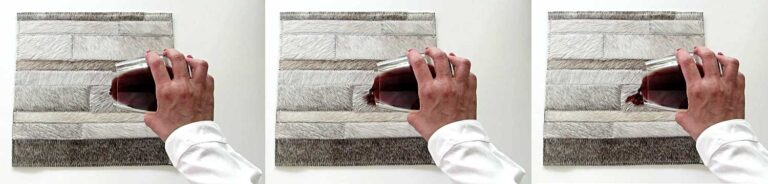
Not at all. Cowhides are naturally stain-resistant and genuinely durable. For regular maintenance, vacuum with suction only (skip the spinning brush attachment) and always go in the direction of the hair. For spills, a slightly damp cloth and a little mild soap is all you need.
They’re actually perfect for minimalist and Scandinavian interiors. The organic texture of the hide provides a quiet but powerful contrast against the sleek lines, glass, and metals that define that aesthetic. It adds warmth without adding visual noise.
Leather has a scent, and it should. A well-tanned hide smells like leather: like a new bag, a worn leather jacket, campfire, or a saddle, the kind of smell that’s actually pleasant. What you don’t want is a foul or chemical smell. That usually means the hide wasn’t tanned properly. A natural leather scent will fade over time with airing out, but it shouldn’t smell bad to begin with.
Yes, and in many ways, more so. Because of the heavy-duty backing and the precision of the stitching, a well-made patchwork rug handles the weight of bedroom furniture and daily foot traffic just as well as a whole hide, if not better. The construction process actually reinforces the leather.

Originally posted on April 23rd, 2024 – Edited on July 21st, 2026