Your cart is currently empty!

The 30-Second Test: How to Spot a Quality Patchwork Cowhide Rug (And Avoid the Imposters)
We Need to Talk About That “Amazing Deal” You Just Found
Picture this: You just scored what looks like the deal of the century on a patchwork cowhide rug. The photos were gorgeous. The price? Almost too good to be true.
Then it arrives.
You cut through the tape, peel back the packaging, and immediately get hit with that chemical smell. You know the one. Like a rubber factory had a baby with a nail salon. The rug itself? Floppy. Wonky stitching that looks like someone learned to sew on YouTube ten minutes ago.
We’ve all been there. Or we know someone who has. That moment when “great deal” reveals itself to be “expensive mistake.”
Here’s how to never go there again.
Your Secret Weapon: The 30-Second Test
Interior designers have a party trick they use in showrooms while pretending to tie their shoes. In exactly 30 seconds, they can tell whether a rug is an heirloom piece or an overpriced disappointment.
It breaks down into three quick checks:
The Touch Test (10 seconds)
The Flip Test (10 seconds)
The Stitch Test (10 seconds)
Master these three moves and you’ll walk into any showroom or unbox any delivery like you own the place. Because here’s the secret: quality always reveals itself if you know where to look.
Let’s break it down.
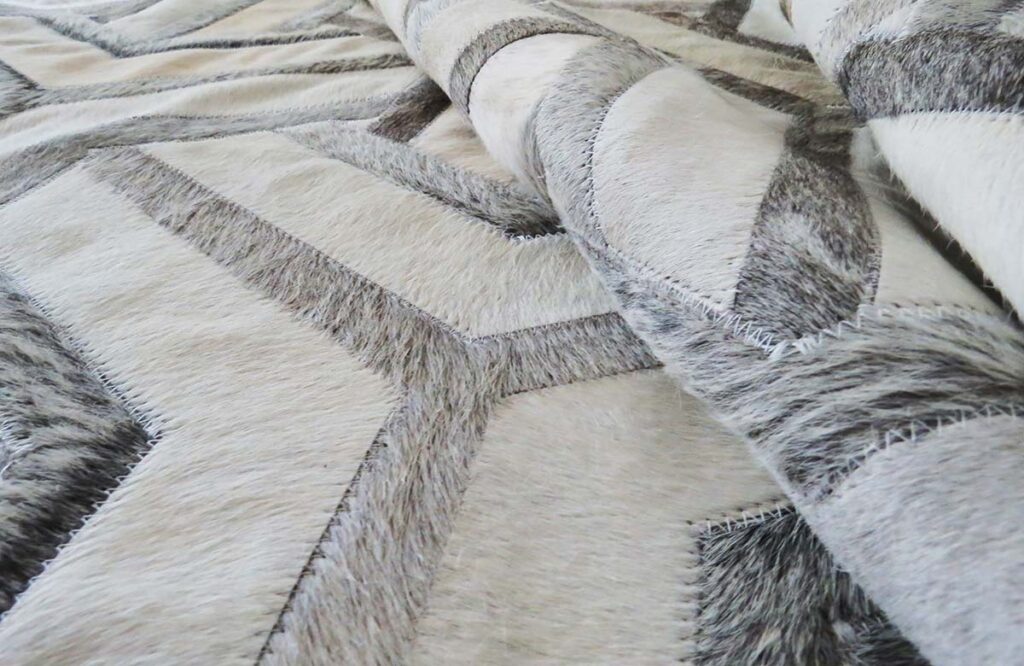
The Touch Test: What Your Fingers Know That Your Eyes Don’t
Here’s what you do:
Run your hand across the hide. Really feel it. Press down with your palm. Try to slide your fingers between the patches where they meet.
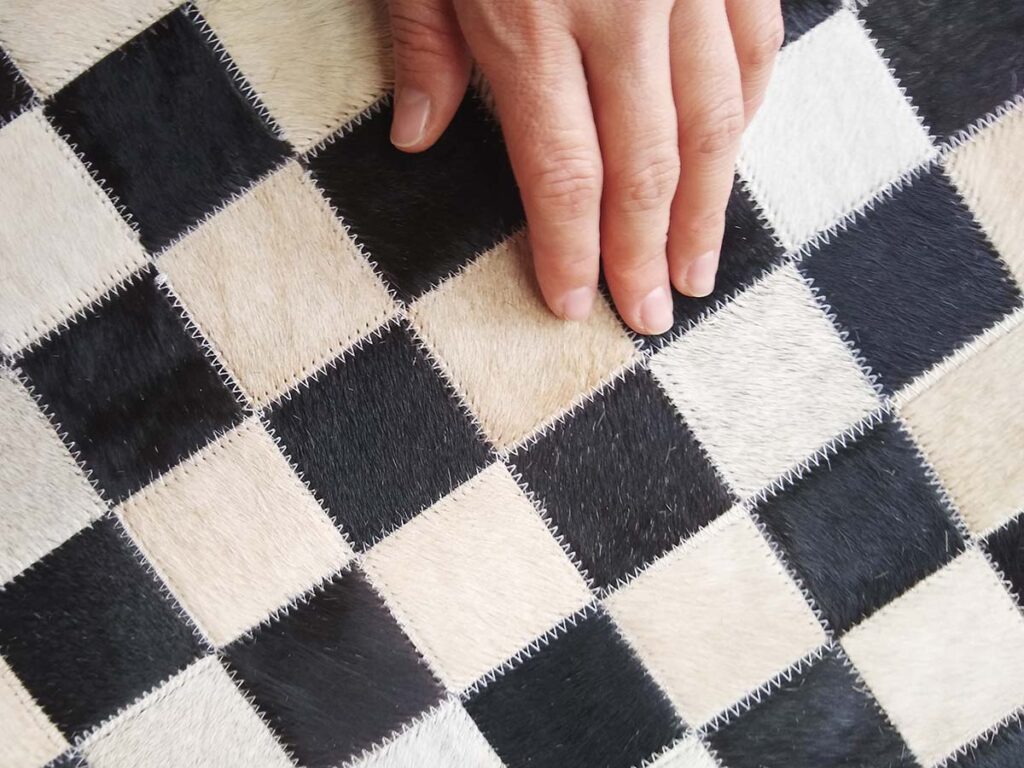
Good signs you’re holding quality:
- Dense, supple feel that has some give but bounces back
- Tight grain that resists your pressure
- Slight warmth to the touch (natural hide breathes)
- No synthetic slickness or plastic coating
- You can’t easily push your fingers between patches

Bad signs you should walk away:
- Feels like vinyl or pleather
- Thin, papery texture that’s stiff or crinkly
- Obvious plastic coating that makes it shiny
- You can feel the backing material through the hide
- Cold to the touch like synthetic material
Here’s where origin matters (but not how you think):
The best patchwork cowhide rugs come from hides that were tanned and finished under the same roof. Our vertically integrated facility (where we oversee everything from hide selection to final stitch) gives us quality control most brands can’t touch. Other companies? They’re piecing together mystery hides from multiple sources and hoping everything matches. Spoiler: it rarely does.
This isn’t about geography. It’s about process. When you control the entire pipeline, you can guarantee every single hide meets your standards before it goes anywhere near a needle and thread.
The Flip Test: The Back Never Lies
Want to know the real quality of a rug? Stop looking at the pretty side and flip that corner over.
Here’s what you do:
Lift a corner of the rug and examine the backing material. Look at how the hide is actually attached. Get close. Really inspect it.
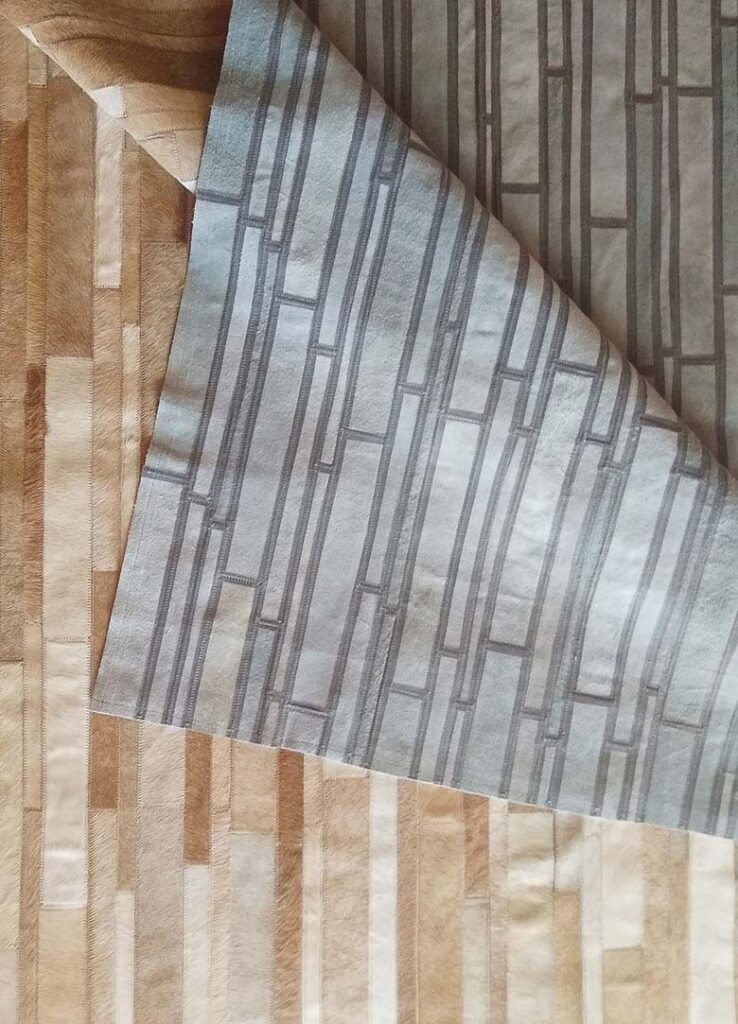
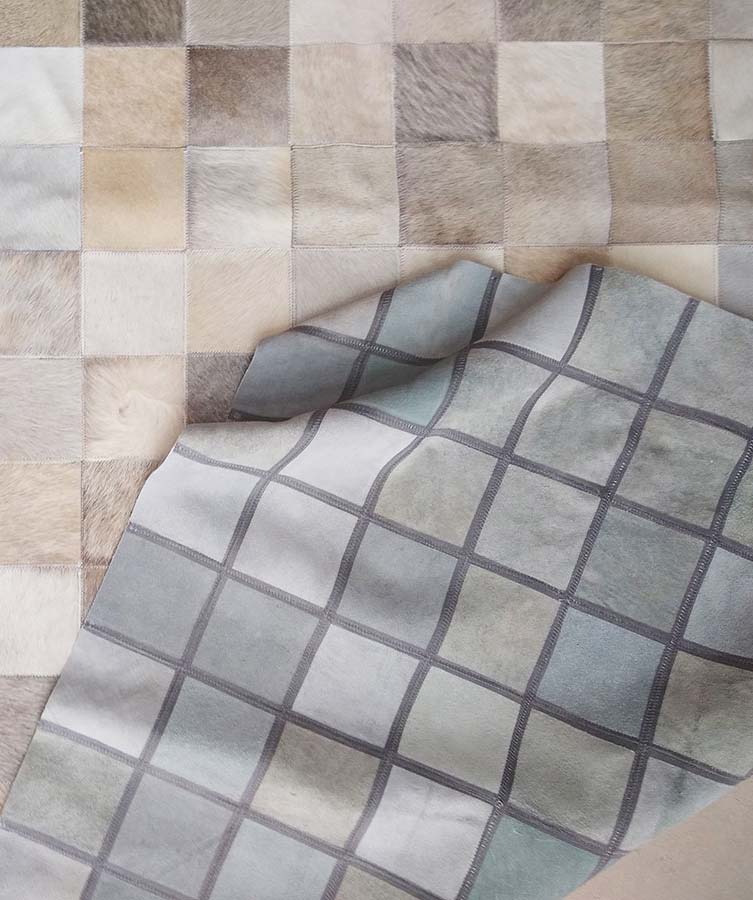
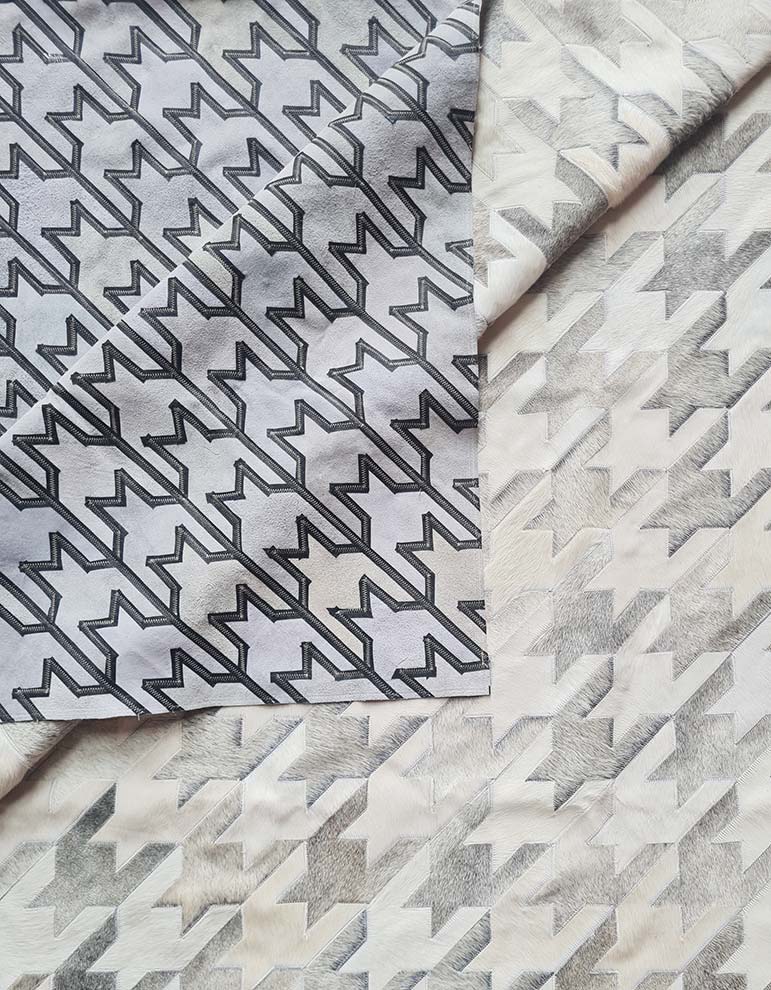
Good signs:
- Suede or felt backing that feels substantial
- Securely attached with no bubbling or gaps
- Clean, finished edges
- You can’t see loose threads or glue stains
- Everything lies flat and smooth
Bad signs:
- Flimsy mesh or canvas backing
- Gaps where you can literally see through to the floor
- Bubbles or wrinkles in the backing
- Glue stains bleeding through
- Raw, unfinished edges
Think of the backing like the foundation of a house. You can have the prettiest facade in the world, but if the foundation is cheap, the whole thing falls apart. Same principle.
The Stitch Test: Perfection Is in the Details
This is where you separate the artisans from the assembly lines.
Here’s what you do:
Get eye-level with the stitching between patches. Look at how the pieces connect.
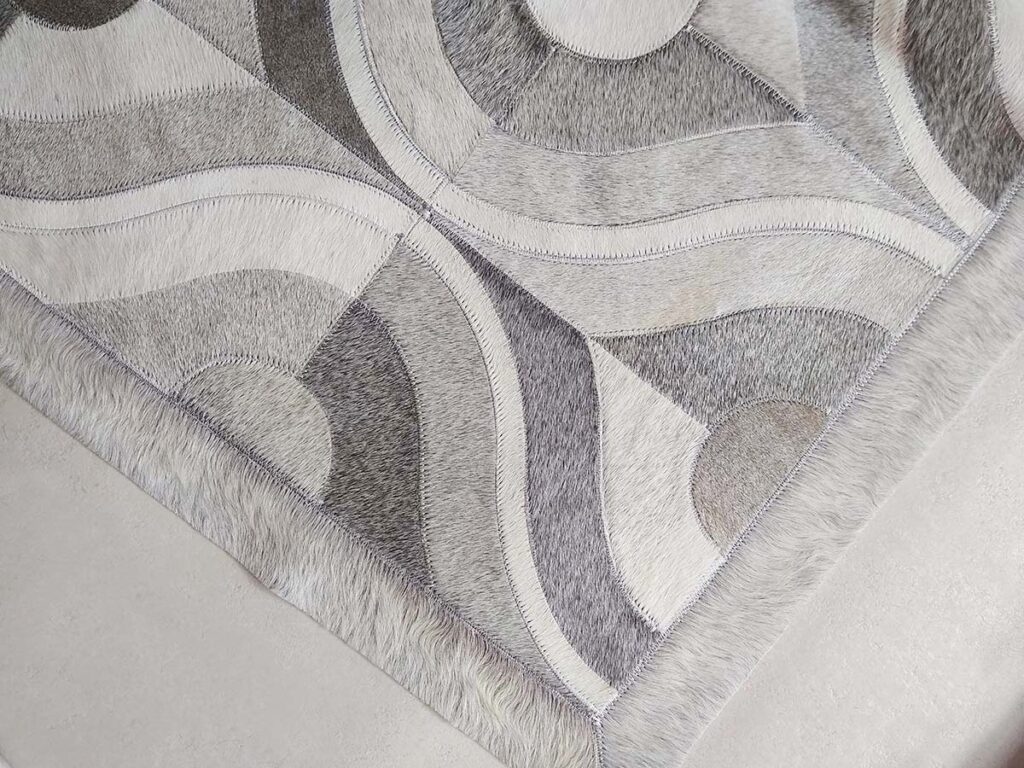
Good signs:
- Tight, even stitches
- Thread color matches the hide perfectly
- No visible gaps between patches
- Stitching follows the pattern precisely
- Each stitch looks intentional and consistent
Bad signs:
- Loose threads hanging out
- Uneven spacing (some tight, some loose)
- White or mismatched thread on dark hides (cost-saving move)
- Gaps you could slip a credit card into
- Stitching that veers off course
Fun fact: Our third-generation artisans could stitch in their sleep. (They don’t. We checked.) Each Chevron pattern has 240 individual stitches. Yes, we counted. Yes, we need better hobbies.
But here’s why it matters: machine stitching can’t handle the natural thickness variations in genuine cowhide. Only skilled hands can adjust tension on the fly to create that perfectly uniform look. When you see perfect stitching, you’re looking at real craftsmanship.
The Price Reality Check: Why “Too Good to Be True” Is Math, Not Greed
Let’s talk numbers for a second because there’s this idea floating around that expensive rugs are just markup and marketing.
Here’s the actual breakdown:
- Premium full-grain hides (not shaved or split leather)
- Artisan labor (people who’ve been perfecting their craft for decades)
- Quality backing and materials
- Free shipping an all orders
- Reasonable margin (yes, we need to keep the lights on)
A $299 “patchwork cowhide” rug is mathematically impossible unless:
- It’s printed on synthetic material
- Made from shaved, low-grade hides that look good for six months
- Stitching is done by machines that can’t handle thickness variations
- The company is taking a loss (spoiler: they’re not)
We’re not saying you need to spend $3,000. We’re saying that a $3,000 rug will outlast three $1,000 rugs and still look better in year ten than the cheap one looked in year one.
Do the math. Quality is expensive upfront but cheap over time.
Real Customers, Real Tests
Don’t just take our word for it. Mark T. from Chicago told us:
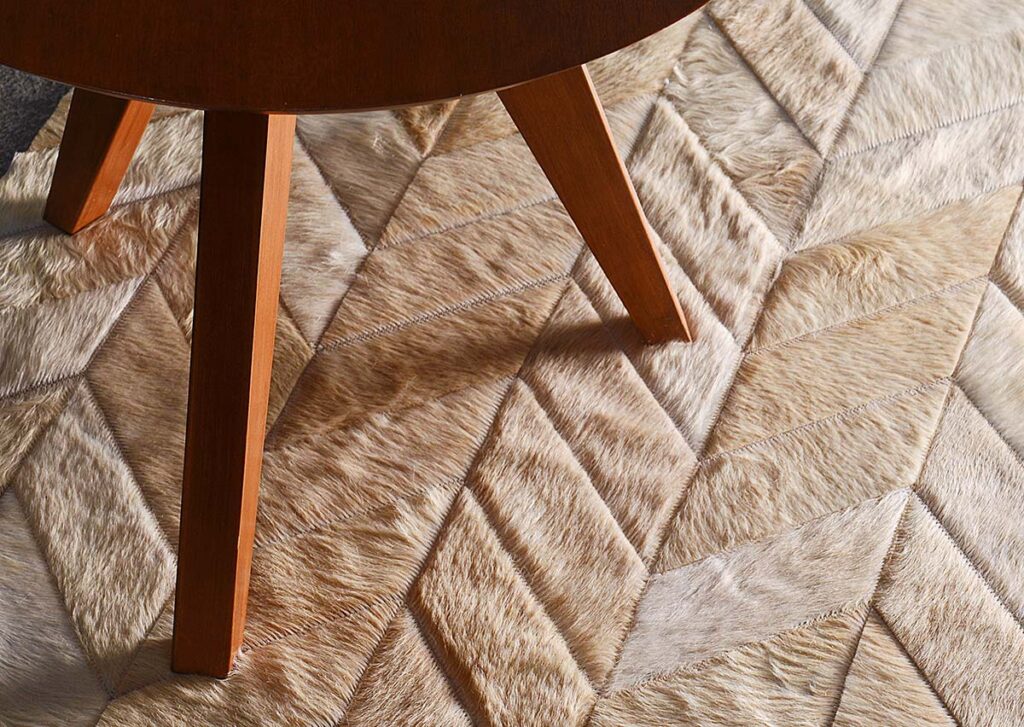
“After buying a ‘discount’ rug online that smelled like a chemical plant, I found you guys. My Shine Rugs Mona rug passed all three checks with flying colors. Two years later, it still looks like the day it arrived. My kids have spilled everything on it. My dog has decided it’s his favorite napping spot. Still perfect.”
The photos don’t lie. Quality announces itself.

Your Questions, Answered
Q: How can I test rug quality when shopping online?
A: Ask for detailed photos of the backing and stitching. Request a swatch if possible (we offer this). Read reviews that mention durability, not just appearance. And honestly? If a company won’t show you close-ups of their craftsmanship, that tells you everything.
Q: What does “hand-stitched” really mean?
A: It should mean actual artisans using industrial sewing machines (not sewing by literal hand, which would take forever). What it really tells you is whether the stitching can adjust to natural hide variations. Machine assembly lines can’t do that. Skilled hands can.
Q: Are expensive cowhide rugs worth it?
A: An expensive quality rug? Absolutely. An expensive cheap rug? Never. That’s why the 30-second test exists. Price alone doesn’t guarantee quality, but quality will never come cheap.
Q: What’s the difference between full-grain and top-grain hide?
A: Full-grain keeps the entire hide intact with its natural texture and character. Top-grain has been sanded down to remove imperfections. Full-grain is more durable and develops that gorgeous patina over time. It’s what we use exclusively.
Here’s What You Do Next
Next time you’re rug shopping (online or in-store), whip out your 30-second test.
If the rug doesn’t pass? Walk away. Doesn’t matter how pretty the photos are or how good the sale is.
If you want a rug that’s already passed with flying colors and is backed by a team that obsesses over every single stitch (seriously, we have spreadsheets about thread tension), you know where to find us.
Want to test before you commit? We’ll send you a swatch so you can do the Touch Test in your own home. Because if a company can’t customize colors, sizes, or send samples, they’re not working with master artisans. They’re mass-producing.
Browse our patchwork cowhide rug collection or start your custom design.
Quality this good shouldn’t be hidden behind shipping fees, which is why we offer free worldwide shipping. Because once you know the difference between real quality and clever marketing, you won’t settle for less.
Now tell us: Have you ever bought a rug that looked amazing online but was a disaster in person? Drop your horror story in the comments. This is a safe space.