
Cowhide Rugs vs. Every Other Material: An Honest Comparison Guide
There’s no single “best” rug material, there’s a best material for you, for your room, and for how you actually live in it.
A rug under a dining table lives an entirely different life than one in a nursery, a rental apartment, or a mudroom from a home full of teenagers..
Before you fall for a pattern, it helps to know what wool, synthetic fibers, silk, hand-knotted wool, flatweaves, and natural cowhide actually do underfoot.
Because that’s what decides whether you still love the rug in five years, not just five minutes after you receive it.

| Feature | Cowhide Patchwork (Shine Rugs) | Wool | Synthetic (Nylon/Polyester/Polypropylene) |
|---|---|---|---|
| Material & Craft | 100% natural leather hide, a byproduct of the leather industry, hand-selected and hand-stitched | Natural spun wool fibers, often machine-tufted | Petroleum-based synthetic fibers, mass-produced |
| Allergy & Dust | Non-porous: traps almost no dust mites or dander | High-pile traps dander, dust, and allergens | Also traps dust and allergens in the pile; can off-gas VOCs when new |
| Spill & Stain Resistance | Beads on the surface; wipes clean in seconds | Absorbs moisture quickly; stains can set | Stain-resistant coating wears off over time |
| Shedding & Durability | None, hair is naturally anchored in the hide | Prone to shedding and pilling early on | Doesn’t shed like fiber, but flattens and wears fast |
| Environmental Impact | Byproduct of an existing industry; no synthetic waste | Biodegradable, renewable resource | Petroleum-based and non-biodegradable. Synthetic fibers shed microplastic into your home, and eventually into waterways |
| Customization | Fully custom sizes, patterns, and colors, made to order | Limited to standard catalog sizes and patterns | Limited to standard catalog sizes and patterns |
Wool
Wool has earned its reputation as the classic soft-rug material for good reason: it’s warm, resilient, and naturally flame-resistant. But wool is also a magnet for moisture and allergens. Its high-pile structure traps dust, pet dander, and dust mites deep in the fibers, which is part of why allergists often steer clients away from wool in bedrooms.
It also absorbs spills instead of repelling them, meaning wine, coffee, or pet accidents need to be cleaned within minutes to avoid a permanent stain.
And despite the higher price tag, wool rugs shed and pill, especially in the first several months, before the fibers settle.

Synthetic (Nylon, Polyester, Polypropylene)
Synthetic rugs are everywhere because they’re cheap and easy to mass-produce. But that low price comes with trade-offs that don’t show up until later.
Nylon, polyester, and polypropylene are all petroleum-based plastics, they don’t biodegrade, and like most synthetic textiles, they shed microplastic fibers into your home, and eventually into waterways, every time they’re vacuumed or walked on.
Many synthetic rugs also off-gas volatile organic compounds (VOCs) when new, which is where that “new rug smell” comes from.
And while some are treated for stain resistance, that coating wears off, leaving the rug just as absorbent, and just as prone to flattening under furniture, as any cheap synthetic carpet.

Silk & Delicate Luxury Rugs
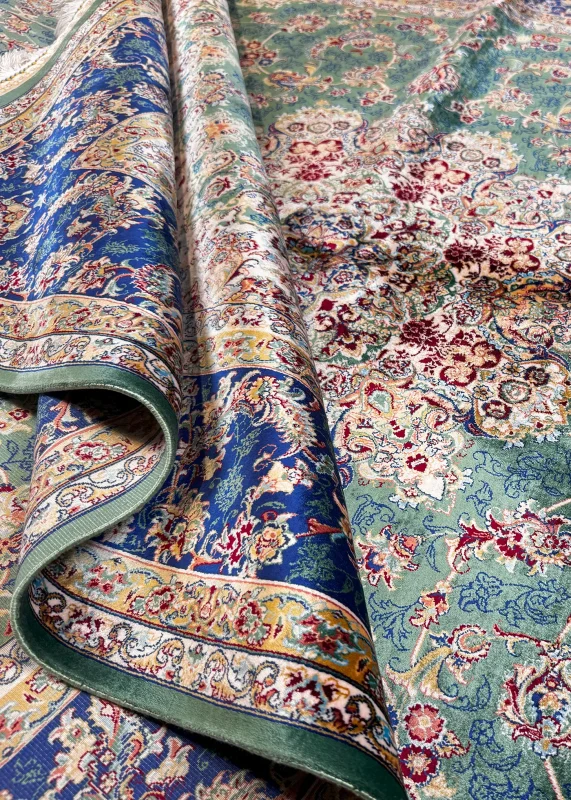
Silk rugs are genuinely beautiful, the sheen and fine detail are hard to match. But silk is also one of the most delicate rug materials available.
It scratches, stains, and wears from foot traffic far faster than wool or cowhide, which is why silk rugs are usually reserved for formal, low-traffic rooms: a dining room used a few times a month, not a living room with kids and dogs running through it.
Professional cleaning is often required, since even a damp cloth can leave a water mark.
Hand-Knotted Wool Rugs
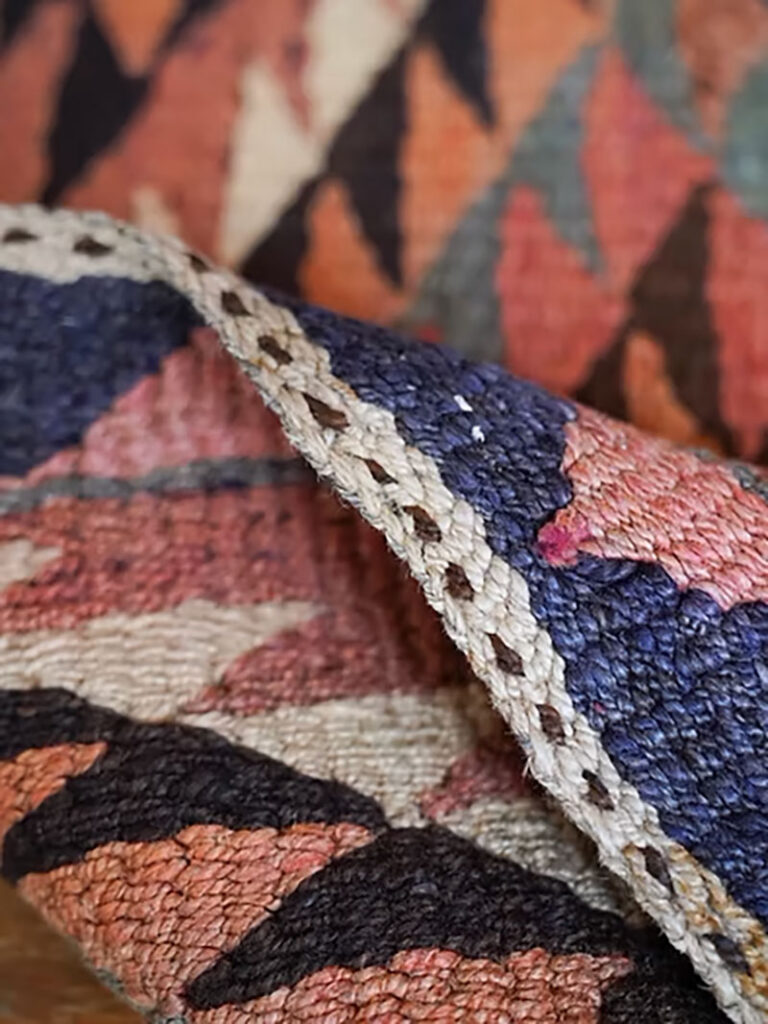
Hand-knotted rugs deserve real respect, they’re true heirloom pieces, often taking weeks or months to make, one knot at a time.
That craftsmanship is genuinely comparable to what goes into a made-to-order cowhide rug.
But a hand-knotted rug is still, at its core, a wool rug: the same moisture absorption, allergen retention, and shedding issues apply, no matter how skilled the weaver.
You’re paying for the craftsmanship and the pattern, not a different set of material properties.

Flatweave, Kilim & Cotton Rugs
Rug pros measure a woven rug’s profile in pile height, literally how tall the yarn loops or cut fibers stand above the backing. A low-pile rug is trimmed close enough to slide under a door; a high-pile shag can be over an inch thick. Flatweaves, kilims, and cotton rugs sit at the very bottom of that scale: zero pile, just flat interlocking threads with nothing standing up at all.
Cowhide doesn’t fall on the pile scale at all, because it isn’t woven, there’s no backing with yarn attached to it. It’s a solid, semi-rigid hide: thin like a zero-pile flatweave, but structurally nothing like one.
That’s the distinction that actually matters: pile height tells you how tall a rug’s surface is. It doesn’t tell you whether the rug will bunch, curl, or slide across your floor. A flatweave has zero pile and zero structure, so without a pad, it moves.
Cowhide has no pile either, but its rigidity comes from the hide itself, not from a fiber layer, so it lies flat on its own.
I’ve seen so many beautiful, interesting kilim rugs, but once you have kids, they become a real hazard, like putting a towel on the floor and expecting no one to slip, slide, and land headfirst on it.
A low-pile wool or synthetic rug at least has enough weight and grip to stay put; a zero-pile flatweave usually needs a rug pad from day one, and even that isn’t a guarantee. It reduces the sliding, it doesn’t eliminate it.
On the plus side, flatweaves are usually machine-washable, which is a real point in their favor if life happens to your floor often.
So beautiful to look at, but not always practical to live with.
Patchwork Cowhide
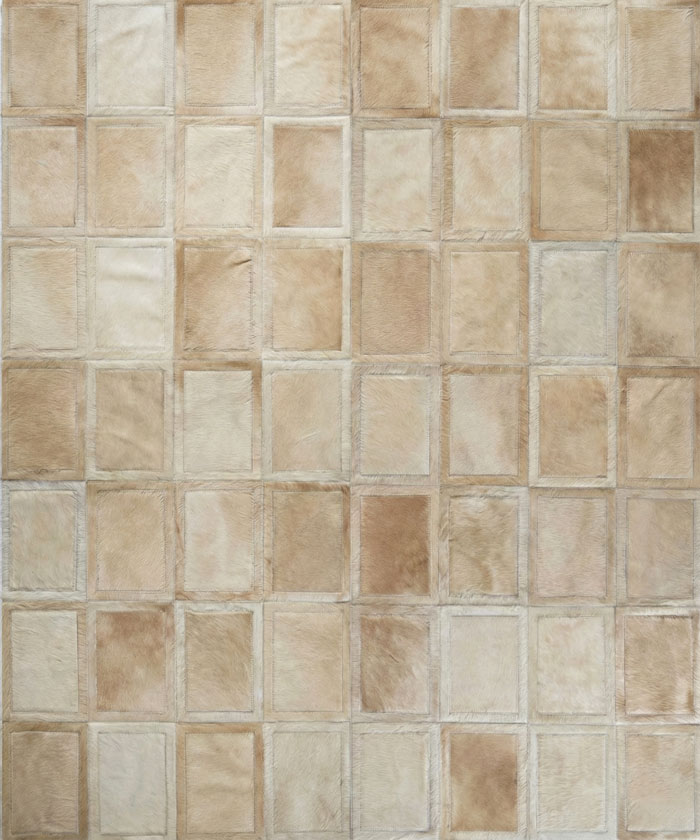
What we build at Shine Rugs isn’t a single cow-shaped hide, it’s a patchwork of hand-selected cowhide pieces, stitched together, with anti-slip backing.
That backing does real work: a layer of felt embedded with small rubber grip dots keeps the rug from sliding, and a thin rubber layer adds a softer feel underfoot than a bare hide would have on its own.
The patchwork construction also makes it more durable than a single cowhide: the seams between patches distribute wear differently than one continuous hide would, holding up better to daily foot traffic.
It lies flat quickly, and because it’s pieced from selected patches, it comes in far more patterns, colors, and natural combinations than a single hide ever could.
Which material is right for you
- Allergies or asthma in the house: cowhide or a tightly-woven flatweave, not wool or high-pile synthetic.
- Pets and daily spills: cowhide, since it wipes clean, over wool or silk, which both absorb.
- Formal, low-traffic room: silk or hand-knotted wool can shine here, where daily wear isn’t a concern.
- Renting, or need it to lie flat without a pad: cowhide, since it doesn’t need the anchoring a flatweave or kilim does. Synthetic rugs can also be a smart choice if you need something less expensive and there are no allergies in the house.
- Budget-conscious, okay replacing every couple of years: synthetic, understanding the environmental trade-off.
- Want something genuinely one-of-a-kind and sized to your space: custom cowhide patchwork rugs.

No rug material is perfect for every room, but once you know what each one actually does underfoot, choosing gets a lot easier.
If your space calls for something durable, easy to clean, and made to your exact size, explore our collection of custom Patchwork Cowhide Rugs, or see how we’re using texture and pattern in 2026’s Neutral Wave.
Interior designers and decorators can also request a custom size through our trade program.